Some towns chase a reputation. Lake Geneva, Wisconsin, just kept the one it earned over a century ago.
Thank you for reading this post, don't forget to subscribe!Long before “staycation” was a word, Chicago’s wealthiest families were already packing up for the summer and heading north to this spring-fed lake. They came for the water. They stayed for something harder to name — a slower pace, a prettier view, a place that felt like it belonged to them for a few warm months a year. That feeling never really left. It’s just gotten more accessible.
If you’re planning a trip to Geneva Lake, Wisconsin, or you’re simply curious how a small Midwest town turned into a premier vacation destination, you’re in the right spot. Grab a coffee. Here’s the real story.
A Quick Introduction to Geneva Lake, Wisconsin
Let’s start with the basics, since a surprising number of visitors show up without knowing much about the lake itself.
Geneva Lake sits in Walworth County, in southern Wisconsin, roughly 80 miles northwest of Chicago and about 55 miles southwest of Milwaukee. That makes it an easy weekend road trip for anyone in the Chicagoland area craving fresh air and a change of scenery, and it’s just as popular as a Wisconsin road trip destination for Milwaukee-area travelers heading the other direction.
The lake itself is a natural, glacially formed body of water — not artificial, despite what a few visitors assume. It’s fed by underground springs, which is part of why the water stays so remarkably clear. Locals and travel writers have been calling it “crystal-clear water” for well over a century, and honestly, the description still holds up.
Quick stats on Geneva Lake:
| Fact | Detail |
| Location | Walworth County, Wisconsin, in Southern Wisconsin |
| Distance from Chicago | Approximately 80 miles |
| Distance from Milwaukee | Approximately 55 miles |
| Surface area | Roughly 5,262 acres |
| Maximum depth | About 135 feet |
| Formation | Natural, glacially carved, freshwater lake |
| Nickname | “The Newport of the West” |
That combination — a large, clean, deep lake within driving distance of two major cities — is the entire reason this historic lakeside town became one of the region’s most iconic vacation destinations in the first place.
5 Interesting Facts About Lake Geneva, Wisconsin
Before diving into the full history, here are five facts that tend to surprise even repeat visitors.
- The town wasn’t always called Lake Geneva. Early settlers named it “Big Foot Lake,” after a respected Potawatomi leader in the region. The name changed after the town’s founders decided it reminded them of Geneva, New York.
- A famous historic observatory sits on its shore. Yerkes Observatory, once home to the largest refracting telescope in the world, has watched over the lake since 1897.
- The lake is spring-fed, not river-fed. That’s a big part of why this freshwater lake stays so clear and cold, even in the height of summer.
- A real mail carrier still delivers by boat. The Lake Geneva Cruise Line’s mailboat tradition is one of the last of its kind in the country — a genuine, working mail route that is also a beloved visitor experience.
- The Playboy Club once called it home. Before it became the Grand Geneva Resort & Spa, the property spent decades as the Playboy Club Hotel, drawing a very different crowd than today’s family travelers.
The History of Lake Geneva, Wisconsin
Now for the full story — and it’s a genuinely interesting one, with more twists than most small-town histories can claim.
Early History: Native American Roots and the Town’s Founding
The Potawatomi people lived along these shores for generations before any European settler arrived, drawn by the lake’s abundant fish, fertile land, and natural beauty. This Native American heritage shaped the region’s earliest identity, and the original name, Big Foot Lake, honored a respected local leader — a piece of indigenous history still referenced by local historians today.
European settlers moved in during the 1830s as part of this region’s early American settlement, chasing the same freshwater supply and rich soil the Potawatomi had valued for so long. What began as a small pioneer community and frontier town was officially established in 1836. Its founders soon renamed the settlement Lake Geneva, inspired by the look and feel of Geneva, New York.
Growth came fast for a frontier town. By 1840, Lake Geneva already had two hotels, two general stores, three churches, and a distillery, alongside its mills and homes. But the town’s real identity — the one that would define it for the next 150 years — hadn’t shown up yet.
The Gilded Age: Mansions, Millionaires, and “The Newport of the West”
Everything changed after the Great Chicago Fire of 1871.
Wealthy Chicagoans, suddenly without homes and desperate for a peaceful retreat, discovered Lake Geneva’s clear water and quiet shoreline. They didn’t just visit. They built.
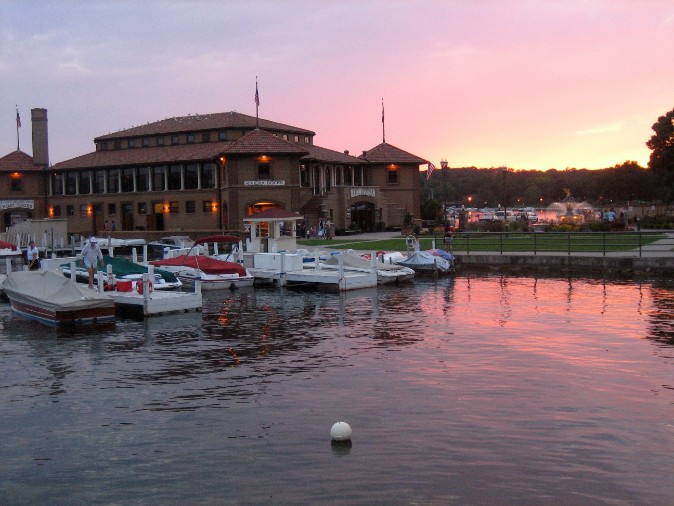
Names like Wrigley, Schwinn, Maytag, and beer baron Conrad Seipp began constructing enormous summer homes and grand summer estates along the shoreline. These weren’t modest cottages — they were showcases of Gilded Age architecture, elegant estates built to rival the grand houses of the East Coast elite. The comparison stuck fast, and the town earned its nickname: “The Newport of the West.”
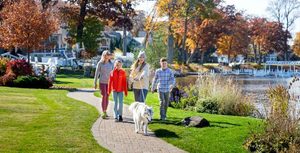
Many of these Victorian-era estates and historic lake homes still stand today as some of the region’s most striking architectural landmarks. You can view several of them from the water or on foot along the Geneva Lake Shore Path, a public trail that winds directly past some of the most impressive lakefront estates in the Midwest.
Locals still refer to this stretch as “millionaire’s row” — a nod to just how concentrated that early wealth once was along a single shoreline.
For history-minded visitors, informal estate tours along the Shore Path remain one of the best ways to experience this era of heritage architecture up close without ever leaving public land.
Cruise Lines, Railways, and the Golden Age of Travel
Word travels fast when a lake looks this good.
By the late 1800s, hotels and resorts started opening across town to keep up with demand. Visitors could take a scenic lake cruise by steamboat or relax on a grand hotel veranda with a drink in hand. When the Chicago & North Western Railway extended rail service to the area, this piece of historic rail travel made the trip from the city dramatically easier — and Lake Geneva stopped being a destination reserved only for the ultra-wealthy.
Some of that era’s charm never faded. Today, you can still enjoy:
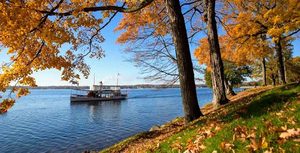
- The historic mailboat tradition with Lake Geneva Cruise Lines, where a mail carrier hops between docks to deliver letters, boat and all.
- Scenic train rides and dinner train experiences on the East Troy Railway, a genuine piece of railroad history still running today.
- Classic steamboat cruises and lake cruises past the same shoreline Chicago’s elite once called home.
Few Midwest towns can claim this much intact transportation history, still in active, everyday use — a rare kind of heritage transportation that turns a simple boat ride into historic sightseeing.
Summer Camps and the Rise of Outdoor Tradition
As Lake Geneva’s reputation spread beyond the wealthy set, it became something bigger: a place for families and kids to connect with nature.
By the early 1900s, organizations such as the YMCA and various churches had begun establishing summer camps around the lake. Kids learned to swim, canoe, hike, and engage in outdoor learning — often for the first time. These children’s camps and youth programs weren’t a passing trend. Many still operate today, and generations of the same families return year after year to relive childhood summers and build new family memories of their own.
This is where Lake Geneva quietly built its second identity: not just a luxury vacation spot, but a place where outdoor family fun and nature education run deep.
Mid-Century Lake Geneva: From the Playboy Club to Family Road Trips
After World War II, car travel reshaped American vacations, and Lake Geneva adapted right along with it. Motels, campgrounds, and family-friendly resorts popped up to serve travelers arriving by highway instead of rail.
Then came the 1960s and ’70s, and with them, a very different kind of attention: the Playboy Club Hotel. The property brought a wave of glitz and cultural buzz, putting Lake Geneva back in the national spotlight. It later became the Grand Geneva Resort & Spa, a transformation that continues to shape the property’s identity today.
Between the family road-trip boom and the Playboy Club years, Lake Geneva pulled off something few destinations manage: staying appealing to nearly every type of traveler at once.
Historic Landmarks and Local Attractions Worth Visiting Today
If you want to see this history firsthand rather than just read about it, a few stops belong on every itinerary:
| Landmark | Why It Matters |
| Geneva Lake Shore Path | A public walking trail past dozens of Gilded Age mansions |
| Yerkes Observatory | Historic observatory, open for tours of its landmark architecture |
| Geneva Lake Museum of History | Local artifacts and exhibits covering the town’s founding and growth |
| Grand Geneva Resort & Spa | Former Playboy Club Hotel, now a full resort |
| Lake Geneva Cruise Lines | Home of the working mailboat tour and scenic cruises |
Each of these cultural landmarks connects directly to a chapter of the story above — walking the Shore Path, for instance, means passing the preserved homes that earned the town its “Newport of the West” nickname.
Outdoor Recreation and Family Adventures
History aside, Lake Geneva has always been a destination for outdoor living first. The lake and its surrounding parks support a full range of lake activities and nature activities, including:
- Swimming at public beaches along the shoreline
- Boating and canoeing across the open water
- Scenic hiking and walking trails through nearby parks and woods
- Shoreline exploration on foot via the Shore Path
- Family recreation at lakefront parks with picnic and play areas
Whether you’re after a quiet nature escape or a full day of family adventures, the lake’s natural landscapes and beautiful shoreline make it easy to fill an itinerary without ever leaving the water’s edge.
Lake Geneva Through the Seasons
One thing that sets this destination apart from a typical summer-only lake town: it’s genuinely a four-season destination.
- Spring travel brings blooming trails and quieter crowds, ideal for a peaceful retreat.
- Summer is peak season for swimming, boating, and downtown festivals.
- Fall getaways bring cooler air and some of the year’s best scenic shoreline views.
- Winter escapes shift the pace toward cozy fireplaces, spa days, and the charm of holiday travel.
Community events, seasonal festivals, and downtown celebrations run year-round, keeping the charming downtown district lively no matter when you visit.
Lake Geneva Today: History Meets Modern Adventure
Fast-forward to now, and this premier Midwest destination hasn’t lost a step. The historic downtown still has that old-world small-town charm, but it’s paired with a lively modern mix of restaurants, boutiques, and cultural attractions that draw crowds year-round.
Whatever kind of trip you’re after, the town delivers:
- Couples find a romantic lakeside escape with waterfront views and quiet shoreline walks.
- Families get outdoor recreation, beaches, and kid-friendly attractions within easy reach of each other.
- Groups and weekend travelers get a walkable downtown packed with sightseeing opportunities, all season long.
That range is exactly why this historic resort town keeps outranking newer, flashier destinations for repeat visits. It’s not chasing trends. It’s built on something more durable: over a century of practice making people feel welcome.
Experience the History Yourself — Stay Just Minutes From It All
Reading about the Shore Path is one thing. Walking it yourself, ten minutes after checking into your room, is another.
That’s the real advantage of staying at Lake Geneva Lodge. The property sits just a short walk from Geneva Lake, putting you close enough to explore the same landmarks covered in this article — the Shore Path, the historic estates, the charming downtown district — without needing a car for every outing.
After a day spent tracing a century and a half of history, you’ll want lakeside lodging built for actual rest, not just a bed. That means:
- Whirlpool tubs and fireplaces for winding down after a day of sightseeing
- Heated pool access and a Zen Den spa for total relaxation
- Complimentary breakfast to start the next day of exploring
- Both cozy lodge rooms and private cottages, depending on what your trip calls for
With over 20 years of hosting guests from across Chicagoland and beyond, Lake Geneva Lodge has built its own kind of legacy — one rooted in consistency, warmth, and trust — the same qualities that turned this town into a bucket-list destination in the first place.
Lake Geneva has always been the place to escape, explore, and reconnect. The history proves it. Your stay can, too.